
The Day David Cameron Came to My Studio
- ANOOP RANDERWALA
- Mar 13
- 3 min read
Updated: Mar 17
On 5 January 2011, my studio had an unusual visitor.
As part of an official Midlands business visit, then Prime Minister David Cameron came to the LCB Depot in Leicester, where my design studio, Innersmile, was based at the time.
He was meeting a handful of creative businesses working in the region. I was running Innersmile with three staff in a large open studio, busy delivering communication projects for young people, public sector organisations and social programmes across the UK. We had built a strong reputation, won design awards, and most of our work came through referral because the projects were delivering real impact.
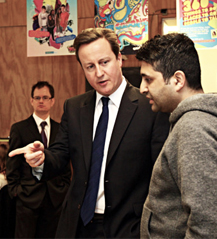
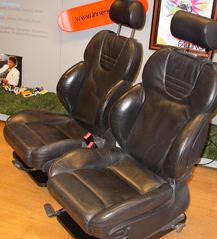
When he stopped to speak to me, I showed him something that probably looked unusual in a design studio: two second-hand leather Audi car seats.
Not because we were restoring cars.
Those seats were being repurposed for a youth centre project in Sheffield, Com.Unity in Westfield, where we were helping turn ideas from young people into a physical environment they actually wanted to use.
Young people had helped shape the vision for the space. They wanted something that felt different from the usual institutional youth provision they were used to. Less authority. More ownership. More identity.
The Audi seats were part of that thinking: taking something unexpected, desirable and real-world, and turning it into furniture that gave the space character.
I explained this to Cameron. His response was simple: “This is good value.”
And in many ways, it was.
Because good youth environments are rarely about expensive spending. They are about intelligent spending, taking limited public money and creating spaces that young people actually respect, use and return to.
That was always the principle behind much of our work: Design spaces that feel relevant.Design communication that feels human.Design environments that quietly influence behaviour.
At the time, Innersmile was heavily involved in public-sector youth communication.
We were producing work for youth services, early intervention projects and community environments, all built around one belief: if young people feel seen, they engage differently.
But within months, the landscape changed.
Following austerity measures introduced in 2010–11, youth funding across England was heavily reduced. Local authority youth services were among the first areas to feel the pressure, with councils cutting provision, reducing staff and closing centres across the country. By the following decade, more than 1,200 youth centres had closed nationally.
For businesses like mine, working closely with that sector, the impact was immediate.
Projects slowed. Budgets disappeared.
And eventually, I had to make staff redundant. That is the part people rarely see when policy changes happen: behind every funding cut are real teams, real projects, real relationships and often work that was preventing bigger problems before they surfaced.
Then came August 2011.
The riots that began in Tottenham spread quickly across England following the police shooting of Mark Duggan, but beneath the headlines sat something deeper: frustration, exclusion, and years of communities feeling unheard. 2011 England riots
No single cause explains what happened. But one thing became harder to ignore: when safe spaces disappear, so do some of the conversations, interventions and relationships that often prevent things escalating.
Youth centres were never just rooms.
At their best, they were social anchors.
Places where trust formed.
Where identity was shaped.
Where difficult conversations happened quietly before problems became public.
That is why I still believe today that designing youth environments is not decoration.
It is prevention. And prevention nearly always costs less than repair.
The irony is, we already knew it was. See refurbished youth centres


Comments